Yuma, Proud Protector costs {5}{R}{G}{W}, minus {1} for each land card in your graveyard. Whenever Yuma enters or attacks you may sacrifice a land and draw a card, and whenever a Desert card is put into your graveyard from anywhere you create a 4/2 Plant Warrior with reach. Every land you put in the graveyard is a card or a creature, and the deck wants to put them back.
The precon already has the Desert makers and the recursion, including Dune Chanter, Hazezon, Shaper of Sand and Ramunap Excavator. Each swap below pairs a cut with an add, and every card is scored with the same numbers the Oracle uses to build decks: synergy and inclusion from the Yuma decks, plus lift, which shows how much more often a card turns up in Yuma decks than in decks that could play it.
Looking for the unmodified list first? Read the Desert Bloom precon guide.
What is holding the deck back
Not enough ways to bring lands back
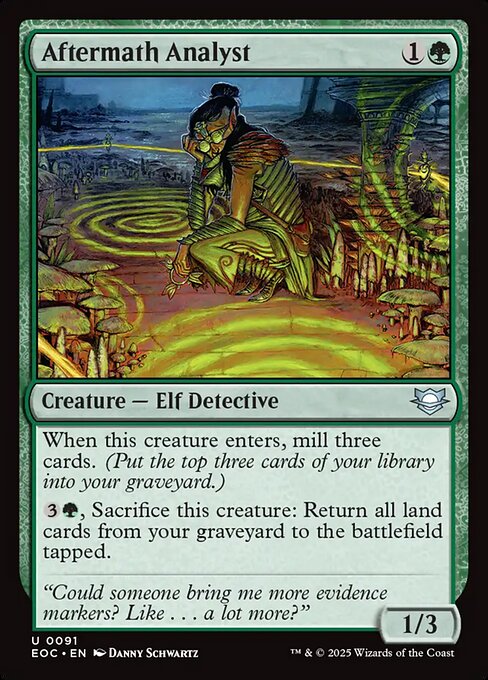
Desert Warfare, Aftermath Analyst, Splendid Reclamation, Conduit of Worlds and Undergrowth Recon all return lands from the graveyard, and Yuma and Titania put them there. They are among the top-scoring cards the precon leaves out.
Few cards that sacrifice lands
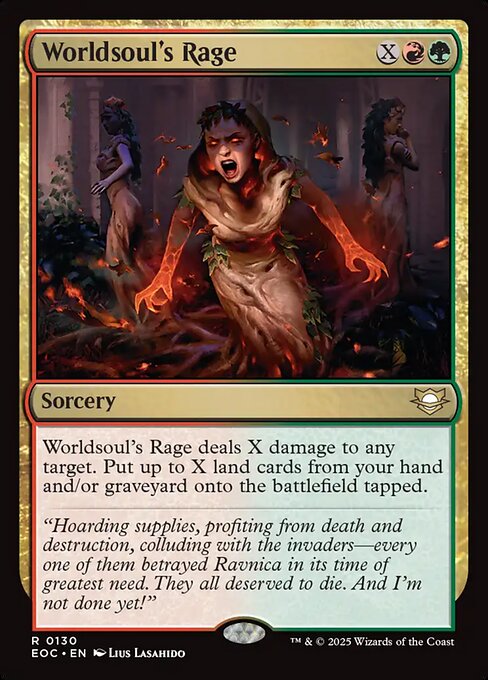
Zuran Orb, Nahiri's Lithoforming and Worldsoul's Rage turn lands into life, cards or damage, and every land that goes to the graveyard is a Plant Warrior for Yuma.
Cards that do little for lands
Angel of the Ruins, Genesis Hydra, Scaretiller, Skullwinder and Unholy Heat are each played in about one Yuma deck in six or fewer.
The 14 swaps
Each pair shows the numbers for the card coming out and the card going in. Click a card image to zoom.


Angel of the Ruins is a seven-mana flier that exiles two artifacts or enchantments. It is played in about one Yuma deck in nine.
Desert Warfare costs {3}{G}. Whenever you sacrifice a Desert or a Desert card is put into your graveyard from your hand or library, you put it onto the battlefield at the beginning of your next end step, and at the beginning of combat with five or more Deserts you create that many Sand Warriors with haste. With Dune Chanter every land is a Desert. It is the highest-scoring card the precon leaves out.
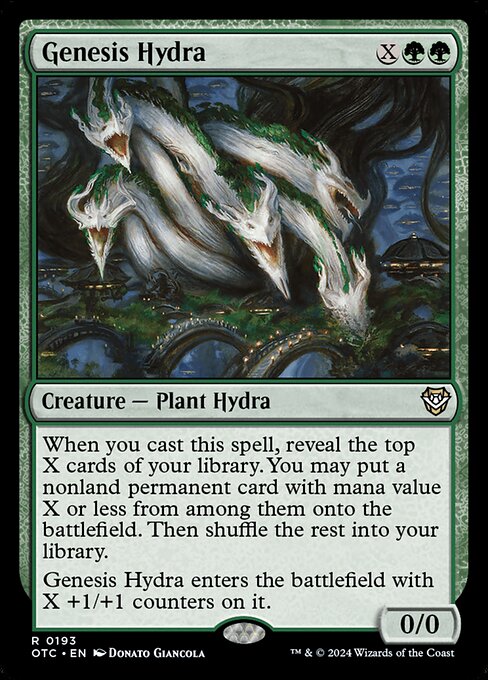
Genesis Hydra is an X spell that puts a nonland permanent from the top of the library onto the battlefield. It is played in about one Yuma deck in eight.
Aftermath Analyst is a 1/3 Elf Detective for {1}{G}. It mills three cards when it enters, and for {3}{G} and a sacrifice it returns every land card in your graveyard to the battlefield tapped. A two-drop that fills the graveyard and then empties it.


Scaretiller is a four-mana 1/4 that returns a land when it becomes tapped. It is played in about one Yuma deck in eight.
Splendid Reclamation costs {3}{G} and returns every land card in your graveyard to the battlefield tapped. Yuma's discount fills the graveyard, and this brings them all back at once.


Skullwinder is a 1/3 deathtouch for {2}{G} that gives an opponent a card back from their graveyard too. It is played in about one Yuma deck in seven.
Conduit of Worlds costs {2}{G}{G}. You may play lands from your graveyard, and for {T} you may cast a nonland permanent card from your graveyard if you have not cast a spell this turn. Another source of land recursion, plus a way to recast creatures.
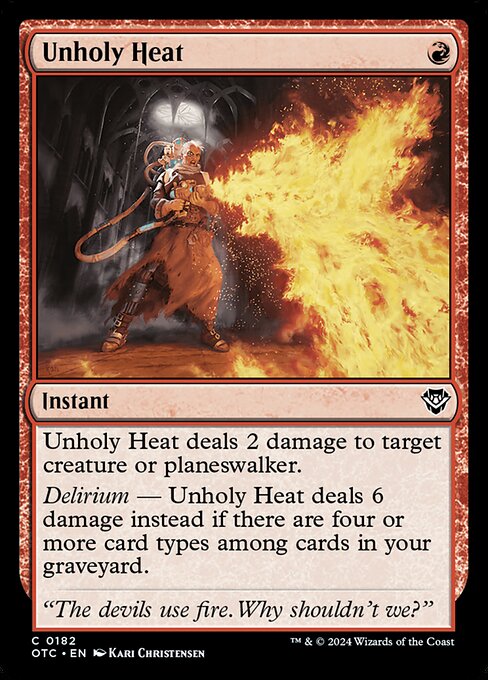
Unholy Heat deals 2 damage for {R}, or 6 with delirium. It is played in about one Yuma deck in six.
Worldsoul's Rage costs {X}{R}{G}: it deals X damage to any target, and puts up to X land cards from your hand and graveyard onto the battlefield tapped. A removal spell that is also a land recursion spell.


Marshal's Anthem gives your creatures +1/+1 and returns creatures with multikicker. It is played in about one Yuma deck in six.
Nahiri's Lithoforming costs {X}{R}{R}: you sacrifice X lands, draw a card for each, and may play X additional lands this turn. Every sacrificed land is a card, a Plant Warrior from Yuma, and a land back in play.
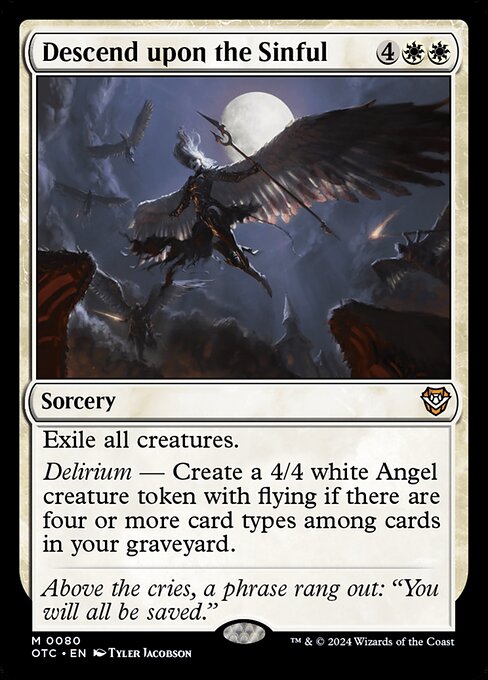

Descend upon the Sinful is a six-mana sweeper that exiles every creature, including your Plant Warriors. It is played in about one Yuma deck in five.
Zuran Orb is a free artifact: sacrifice a land and you gain 2 life. A way to put lands in the graveyard at no mana, which makes Yuma cheaper and creates Plant Warriors.


Nantuko Cultivator is a 2/2 for {3}{G} that discards lands for counters and cards. It is played in about one Yuma deck in five.
Undergrowth Recon costs {1}{G}{G} and returns a land from your graveyard to the battlefield tapped at the beginning of each upkeep. A land comes back every turn, so every land you sacrifice is a land you keep.


Angel of Indemnity is a 5/5 flying lifelink Angel for {5}{W} that returns a cheap permanent. It is played in about one Yuma deck in four.
Rampaging Baloths is a 6/6 trampler for {4}{G}{G}. Whenever a land enters under your control you create a 4/4 Beast. With land recursion every land drop is a Beast.
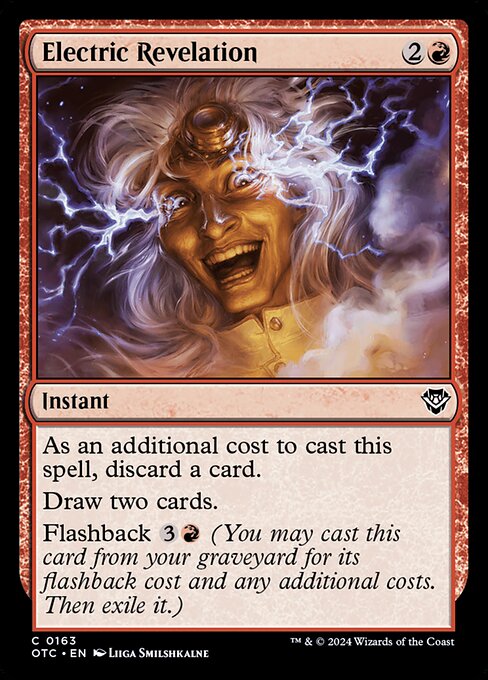

Electric Revelation is an instant that discards a card to draw two, with flashback. It is played in about one Yuma deck in four.
Felidar Retreat costs {3}{W}. Whenever a land enters under your control you choose one: create a 2/2 Cat Beast, or put a +1/+1 counter on each creature you control and give them vigilance until end of turn. Another landfall payoff, in the one colour that needs it.

Sunscorched Divide is a land that costs {1} and a tap to add {R}{W}. It is played in about one Yuma deck in three.
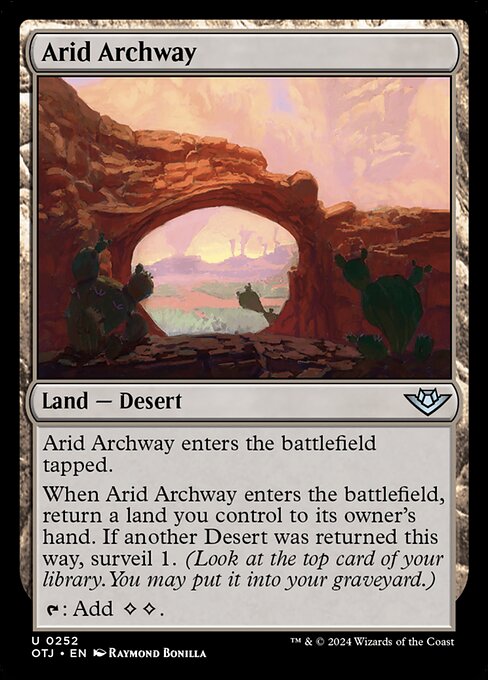
Arid Archway is a Desert land that enters tapped and returns a land you control to your hand, and taps for {C}{C}. It surveils if the land it returned was another Desert, and the returned land can be played again later, which is another landfall trigger.

Swiftfoot Boots is a two-mana Equipment that gives hexproof and haste. It is played in about one Yuma deck in three, and does nothing for lands.
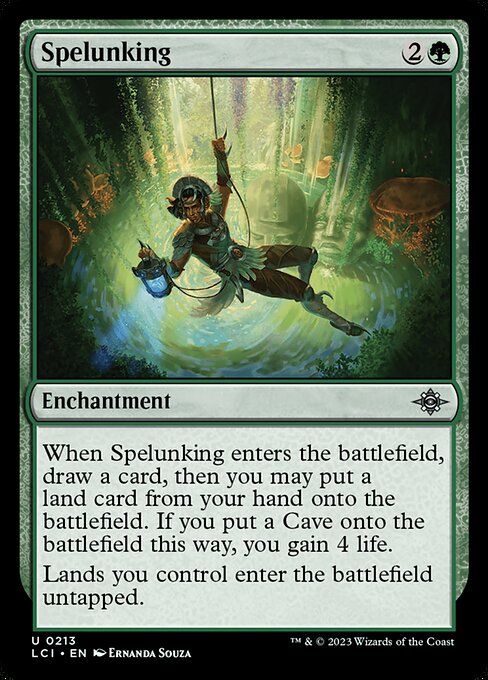
Spelunking costs {2}{G}. When it enters you draw a card, then may put a land from your hand onto the battlefield, and your lands enter untapped. A land drop that replaces itself, and every land you put in the graveyard still makes a Plant Warrior.
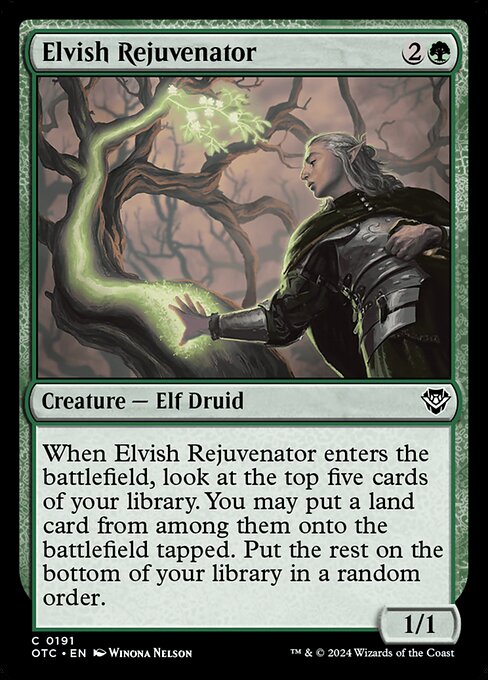
Elvish Rejuvenator is a 1/1 for {2}{G} that puts a land from the top five onto the battlefield. It is played in about one Yuma deck in five.
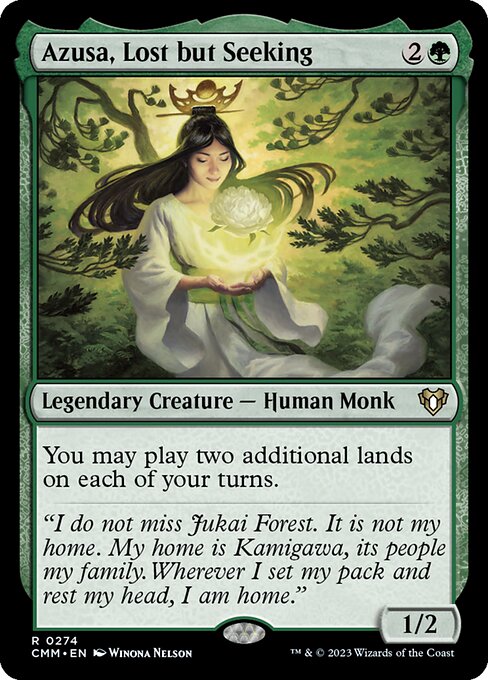
Azusa, Lost but Seeking is a 1/2 Human Monk for {2}{G}. You may play two additional lands on each of your turns. Three land drops a turn, and each one is a landfall trigger.
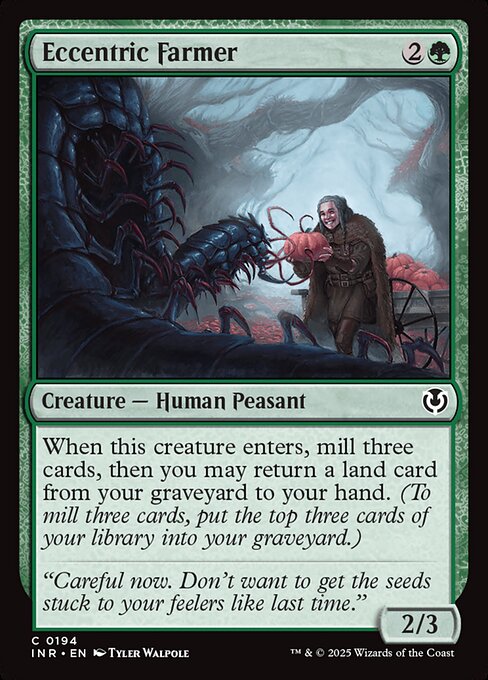

Eccentric Farmer is a 2/3 for {2}{G} that mills three and returns a land to your hand. It is played in about one Yuma deck in four.
Life from the Loam costs {1}{G}. You return up to three land cards from your graveyard to your hand, and it has dredge 3, so you can replay it every turn. Lands in the graveyard are the fuel for Yuma, Titania and Desert Warfare, and this brings them all back.
The full swap list
Cut
- Angel of the Ruins
- Genesis Hydra
- Scaretiller
- Skullwinder
- Unholy Heat
- Marshal's Anthem
- Descend upon the Sinful
- Nantuko Cultivator
- Angel of Indemnity
- Electric Revelation
- Sunscorched Divide
- Swiftfoot Boots
- Elvish Rejuvenator
- Eccentric Farmer
Add
- Desert Warfare
- Aftermath Analyst
- Splendid Reclamation
- Conduit of Worlds
- Worldsoul's Rage
- Nahiri's Lithoforming
- Zuran Orb
- Undergrowth Recon
- Rampaging Baloths
- Felidar Retreat
- Arid Archway
- Spelunking
- Azusa, Lost but Seeking
- Life from the Loam
What to keep
These cards are doing the deck's heavy lifting. Do not cut them.
- Dune Chanter$1.16
Played in 96% of Yuma decks. Makes every land you control a Desert, lets them tap for any color, and mills two a turn. - Hazezon, Shaper of Sand$0.24
Lets you play Deserts from your graveyard and makes two Sand Warriors whenever a Desert enters. - Ramunap Excavator$4.36
Lets you play lands from your graveyard. - Titania, Protector of Argoth$0.31
Returns a land from your graveyard, and makes a 5/3 Elemental whenever a land you control goes to the graveyard. - Avenger of Zendikar$0.47
Makes a 0/1 Plant for each land you control, and grows them on every landfall.
If you want to spend more
These are strong but sit outside a budget upgrade. Prices are the cheapest paper printing.
- Six$5.12
Mills three each attack and lets you cast permanents from your graveyard.
Desert Bloom already has the Desert payoffs and the recursion. The upgrade is cheap ways to put lands in the graveyard and bring them back, in place of sweepers, white fillers and cards that do little for a lands deck. These fourteen swaps cost about $31 in total.
Want a full 100-card list built around Yuma, Proud Protector from today's data?
Build with The Oracle →Frequently asked questions
What are the best upgrades for the Desert Bloom precon?
Using data from 7,615 Yuma decks, the highest-scoring additions are Desert Warfare (for Angel of the Ruins), Arid Archway (for Sunscorched Divide) and Zuran Orb (for Descend upon the Sinful). The full list has 14 swaps, each scored with synergy, inclusion and lift.
How much does it cost to upgrade Desert Bloom?
All 14 swaps cost about $30.65 at the cheapest paper printings (TCGplayer market prices via Scryfall, 2026-10-27). If you want to spend more, the guide also covers Six ($5.12).
What should I cut from Desert Bloom?
The weakest cards for this commander are Angel of the Ruins, Genesis Hydra and Scaretiller. The guide explains the reason for every cut, and swaps each one for a card that scores higher.
Which cards should I keep in Desert Bloom?
Keep Dune Chanter, Hazezon, Shaper of Sand, Ramunap Excavator, Titania, Protector of Argoth and Avenger of Zendikar. These are the cards doing the deck's heavy lifting.
What does Yuma do?
Yuma, Proud Protector costs {5}{R}{G}{W}, minus {1} for each land card in your graveyard. Whenever Yuma enters or attacks you may sacrifice a land and draw a card, and whenever a Desert card is put into your graveyard from anywhere you create a 4/2 Plant Warrior with reach. Every land you put in the graveyard is a card or a creature, and the deck wants to put them back.
More Outlaws of Thunder Junction Commander upgrade guides
How the numbers work
Inclusion is the share of Yuma, Proud Protector decks (7,615 of them when this was written, 2026-10-27) that play the card. Synergy is how much more often they play it than other decks in the same colours. Oracle score is synergy × 0.6 plus inclusion × 0.4, the same blend The Oracle uses to rank cards for a deck. Lift compares how often the card appears in these decks with how often it could, capped at 8× here; it is shown for context and does not change the score.
Two cautions. Players who run the precon unmodified count as Yuma decks, which flatters every card the precon contains. Lift is high for many land recursion cards because few decks play them outside a lands deck, so use lift to compare cards, not to judge one in isolation. Prices are the cheapest non-foil paper printing on TCGplayer (via Scryfall), in USD, and move daily.